I Went Searching For an Indian and Found I Was a Dutchman

I Went Searching for an Indian and Found I Was a Dutchman.
I've always been interested in history so when my Uncle Wayne gave me some information about our family roots I had to begin changing the way I've always thought about where I came from. We had always been told, "there's Indian blood in our ancestry, we just haven't been able to prove it". I have been surprised to learn that while searching for an Indian link, I found a Dutchman. Now I'm not saying there may not be some Indian blood somewhere but the prospect looks dimmer the more I find out.
I also have had some general prejudices about folks back east, especially areas like Ohio (I grew up in the Woody Hayes era and couldn't stand Ohio State). What a surprise (and God ordained I believe) to find we arrived in Ohio in the early 1800s, my ancestor fought in an Ohio Regiment in the Civil War, and came to Kansas afterwards. That, and some visits to Ohio, has adjusted my thinking.
And the other reason why-to keep communication between the far flung members of my family and encourage them to drop a note so we can keep in touch with the details of their lives. We miss too much by not being there in the day to day workings of life. So, leave a post for all of us.

Monday, December 15, 2025

The Sad Tale of Dwight Neff

I've been working on my Ancestry tree since I got access to Fold 3 and Newspapers.com, reviewing names from the past and opening documents I've not been able to get to previously. I've found some fascinating information in the stories of our ancestors. I've always been intrigued by this fella, Dwight Neff, and the fact that he disappears from our history at a young age. I wish I still had the opportunity to question my grandparents and older aunts and uncles to get their first hand account of the memories they had. But since that chance has passed, I'll have to go on what I know. This boy shows up in pictures with his jaunty attitude and dapper outfit and grabs my attention. So what happened?
The story starts with his mother, Stella Mae Icke, who is the oldest sister of my paternal grandmother, Rachel. She was born in 1895 in Missouri, the daughter of John Cheatum and Louisa Douaberry Caroline. Her family, the Hoyles, moved from her birthplace in Illinois to Ness City, Kansas. At some point she met John and they were married in Iowa. The Icke's had moved to Missouri, where Stell and severl of her siblings were born, and eventually ended up in Oklahoma Territory. There she married Joe Neff in 1915 at the age of 19. They had several children, Stella Marie (Dolly) in 1916, Bessie Evelyn in 1918, Margaret Naomi in 1920 all born in OKlahoma before they moved to Colorado where little Joe was born in 1922. Sadly, he died at three months but shortly after along came Dwight Edward in 1924. The family then moved to New Mexico.
At less than a year old in 1925, poor Dwight's mom died there in New Mexico, and he was left to be raised by his dad Joe, along with the other children. the oldest being nine. Surely it was a difficult time for the family and it appears that Joe moved back to Oklahoma to be closer to Stella's family for support. Stella's father, John, had died in 1914, before her marriage, and in 1919 Stella's mom, Louisa, married Elijah "Lige" Snider who had lost his wife in 1917. He was a one-legged man but in a picture around 1935 he appears to still have them both. I always wondered what happened to that leg. So Joe brought the family back and the Sniders became a large part of their life.
Tragedy seemed to follow though as on the last day of March, 1929, Dwight's dad Joe passed when Dwight was just five. Joe died intestate (without a will) and so Louisa filed the paperwork with the court on April 15 and were granted custody. Well, it doesn't end there.
Louisa became sick, apparently a cancer of some type, and tried everything to get healed, even traveling to the Baker Institute, an early attempt at a cancer hospital, in Muscatine, Iowa. The treatment was unsuccessful and on a bright sunny December day in 1936, she was buried surrounded by family. Lige now had the grandkids and times were tough so he petitioned the court to grant him more money from Joe's estate to help with expenses. They granted him $15 to care for Margaret and Dwight. Bessie, apparently, had moved out by that time. Our sad story comes to an end on March 30, 1938, almost two years to the day after his dad's death, Dwight succombed to pneumonia at ths home of his aunt and uncle, Coy and Bessie Phillips, in Mooreland.
A short and difficult lifetime closes. But hopefully this story will keep HIS story alive for another generation. Lige Snider passed on July 3, 1943, at the age of 83 but Dwight's siblings lived on to long lives with children and grandchildren. Bessie married Coy Phillips and had five children, living out their lives in Oklahoma. Margaret married Dave Windecker and also lived out a good long life in Oklahoma. These are the people of my past. Through good times and bad, they lived and died, every much alive as you and I are today. Will anyone remember our story?
Photos from top: Dwight Edward Neff; Stella (Icke) Neff; Joe Neff, Sr; Lige and Louisa Snider with Rachel's children. I believe Dwight is standing center; Dwight's Obituary; Joe and children; Court documents.

Monday, January 8, 2024

Booty Green

AsI tell this story, it sounds like Jean Shepherd in my head. Jean Shepherd is the author of "In God We Trust: All Others Pay Cash" from which the famous movie "The Christmas Story" was taken. The movie was a compilation of many of the stories of his youth in northern Indiana and is a hoot to read. From it was also taken another movie, less known, called "Ollie Hopnoodle's Haven of Bliss" about their yearly two week fishing trip up north to stay in one of the fishing cabins named after the Dionne quintuplets. It has Ralphie and family as a bit older and a different cast of actors (James B Sikking plays the dad) but a great story. Get a copy if you can. So anyway, when you read the story that follows, imagine a Jean Shepherd narration, as he does in The Christmas Story.
In high school there was a bunch of us neighbor kids who hung together, alley buddies as it were. I lived in Topeka, Kansas, on MacVicar and the alley behind our house was well trodden with our feet as we all played army, rode bikes, and played football and pickup basketball games on any hoop we could find. At the other end of the alley and across to the east and in the next block was Kevin Stovall's house where he lived along with his three brothers Mark, David, and Brian. Kevin was the oldest. I was the oldest of three brothers as well with Wyatt and Breck. Joining us from around the neighborhood was also our buddies, Danny Brook, Joe Scraper, and the Proctor brothers at times. Also Bill Bonjour who didn't live in the neighborhood but was always there it seems since he and I had hung together since grade school. The basketball games would be held at any hoop down the alley; the one on the pole behind my house, the one at Skip Anderson's driveway, or others along the alley that were left unattended.
Stovalls had an old one car old Model T garage but one year their folks decided to tear it down and make a two car garage facing the street and with a huge (we thought) drive way. It was the Taj Mahal Mecca of basketballery.
We owned the alleys and all the backyards. Nothing was off limits as far as we were concerned and when we got hungry, there was that big mullberry tree halfway down where we could get a snack and purple stains on our shirts. In the summers we were out all day, coming home with the street lights or when mom sent younger brother Breck down to let us know supper was ready. It was a heady life. Life moved on after high school and sadly, I went to the funeral of my high school buddy Kevin Stovall last Saturday. I was reminiscing with his brother Mark and Mike Proctor. And of course, the pastor asked us to say something about him so (pushed forward by his wife Lisa) I did. That got the juices flowing and I woke up in the middle of the night, running memories through my head. As I lay there in my insomnia, I remembered the basketball game we used to play. I had forgotten. It was called Booty Green.
To this day I have no idea where the name came from but since it was the 70's booty was a popular word for your backside and we had songs to go along with it: "Shake, Shake, Shake, Shake Your Booty" to a disco beat. What it had to do with our booty or why Green was added we never knew. But that's what we called it. And we assumed worldwide, that's what everybody called it. What a surprise when we met up with kids outside our sphere and they didn't. Some called it 21, for obvious reasons (I'll explain) but that seemed such a dull thing. In my neighborhood when you said, "Ya wanna play some Booty Green?" everyone knew what you meant. Anyway, this is how it's played: You had to decide who went first, oldest, youngest, you started last time so it's someone elses turn-no I didn't that was Joe, etc. The winner would get the ball first and of course it was every man for himself (you kept your own score-no cheating) so it seemed a good idea, at least initially, for all to gang up on the guy with the ball and steal it away. As we got older we realized that it was easier to push him to the farthest limits of the driveway (ya we were playing at Kevin's!) for him to put up a hail mary and we could get the rebound, or better, the complete miss. Any shot hit from the field was worth 2, then the shooter got to go the freethrow line to make as many as he could for 1 point each. But a guy had to be careful because if he hit 13 and missed the next shot, he busted to zero.
As you can imagine, there were many accusations of tripping and fouls which were always met with loud denials of "That wasn't a foul!". If the ball went out of bounds whoever got it first got to bring it in unmolested until he got on the court (after all, we weren't Philistines) and then started the melee again. If it went out into the garage, you had to take it out under the basket and hope for a trick shot back at the basket. That didn't happen much since Kevin's dad Marvin wasn't wild about us pummeling his classic Cadillac. This all continued until one guy, either by a shot from the field when he had 19 that made 21 or if he was foolish and got himself into this predicament by poor planning, had 18 and made a shot which gave him 20. Then he had to make the freethrow. If he did the game was over so his shot was always accompanied by "Miss, miss, miss!" and various other comments and noises. There was some strategy as we got older and more experienced. If you were smart you hung out under the backboard hoping for the rebound and a quick put-back. So we always tried to get the younger guys (less experienced and not as smart as us) to go out and guard (harass) the shooter so we could get the easy one. Once you made a shot and were at 2 now the real strategizing begins: Hmm, do I try to make a few three throws and take a chance on getting an odd number or bing it off the front of the rim and try to get the rebound back to me before those other rubes (who were looking at the backboard) realized what was happening? Strategy.
Of course after getting past the dreaded 13, one WANTED to be on the odd number so he could hit right on 21 from the field. So at some point you had to make a free throw. Because if you got to 20 and missed the free throw, you busted to 10 (or 0 or 11, whichever variation we argued for at the beginning). Now here's where it really got interesting. You could burn the backboard after you got 10 points. Ah, burning the backboard and all of it's various nuances. Burning the backboard consisted of hurling the ball from the free throw line like a baseball, one handed, so it would bounce off the backboard and back to you, and give you another chance at a two pointer and free throws. Of course, the other guys, knowing you had a chance to burn the board, would back up to beat you to the rebound. This moved to the next update to burning-butt burners. Basically (all this negotiated at the time of the first guy getting to 10 usually by one guy yelling loud enough "no butt burners!") you could burn anything. Another guy who wasn't paying attention, your little brother, the fence, the garage wall, all in the hopes you could get the ball back. But you couldn't burn yourself. It was tried and considered cheating. Many times, if the burner didn't have good burning skills, the ball missed the backboard and the garage in it's entirety to which started the charge up the alley to track it down and get a chance at bringing it in. One had to pick his battles though. If it was obvious someone else would beat you to the loose ball, you'd save your energy and wait to attack him back at the court (or better yet, let the other guys do it and wait for the wild shot for a rebound and quick 2!) When the game was over, losers had to submit to butt burners, lined up in a row, for the pleasure of the winner. Unless the majority objected to the humility or just went home (I hear my brother calling-time to go!) The final iteration of Booty Green, the last I remember anyway, was a jungle rule, no holds barred, free for all where we expected the ball carrier to dribble but pretty much everything else went by the wayside. Until the ball went in the hoop. The we all settled for the free throw. You had to have SOME rules. After all, we weren't hooligans. Or were we? That's the subject of my next story. Coming soon.

Saturday, August 27, 2022

Life is Hard

 There are times when exploring genealogy you stumble on a story that grips your heart and causes you to pause.  This is one.  

Our family has two photo albums that get dragged to every reunion and although I digitized them years ago, I am in the process of adding notes and arranging them chronologically as best I can.  I have to refer to my Ancestry.com tree (https://www.ancestry.com/family-tree/tree/5599212/family?cfpid=-1065239315 ) frequently. But of the most help is the notes attached to each picture, painstakingly added by Uncle Vic and without such, to me, they would be just faces.  But with the notes come a link to a name and now history is alive.  Thanks Uncle Vic.

Well, anyway, as I'm working on these I come across this picture with the caption "Dee, DeEtte & Children (Warren, and ?").  

Feb 8, 1955. Dale, DeEtte & Children (Warren & ?)
So why the "?"?  Uncle Vic knows the family pictures better than anyone (certainly anyone alive anyway).  Why didn't he have memories of her? That sent me wondering.  I checked my tree and found there was already a Natalie there but no dates or information.  However Ancestry has these handy hints so I started looking at them and found her name was actually Nathalia DeEtte Icke and she was born in 1953 but died in 1960 in Wisconsin.  What could have happened?

Dale was the younger son of Grandma Rachel's brother John Icke (pronounced "Ike") and sister in law Velma.  He was born in 1932 and later joined the Air Force apparently stationed in Japan for a while.  He married Jessie DeEtte Davison in Oklahoma on April 22, 1952.  The picture above was taken in 1955, after the Korean War, and shows a happy family of four.  In 1960 he was stationed at Traux Lake Mills (WI).  Sadly on a Friday evening in early June, not long before her upcoming seventh birthday, Nathalia was riding her bike when an automobile collided with her and she was killed.  One can only imagine the grief of that day and the days to follow.  They took "Our Darling Cissy" back home to Oklahoma where she is buried at Memorial Hill Cemetery in Waynoka.

It would be crass of me to begin philosophizing on such things as I have never lost a child.  I can only imagine that loss.  But I do know it's part of life and people deal with it.  For some it takes years to "get over it"-that thing we call getting on with life without the loss being the focus of each day.  I grieve as I can with those in my family who have suffered this loss, as the Ickes did.  I pray that the Lord will sustain them until that day when the sweet memories of the life lost overcomes the grief of their loss.  
Dale lived on until 2014, a long life of 88 years, and I wonder how many days he thought of her. Most of them I would guess.  Her mother DeEtte and brother Warren are, to my best information, still alive.  I hope this little note encourages them that their family hasn't forgotten the life of their beloved darling Nathalia.
May the promises of eternal life and sustaining grace through our Lord, Jesus Christ, sustain and comfort them until the day of reunion.


Monday, July 11, 2022

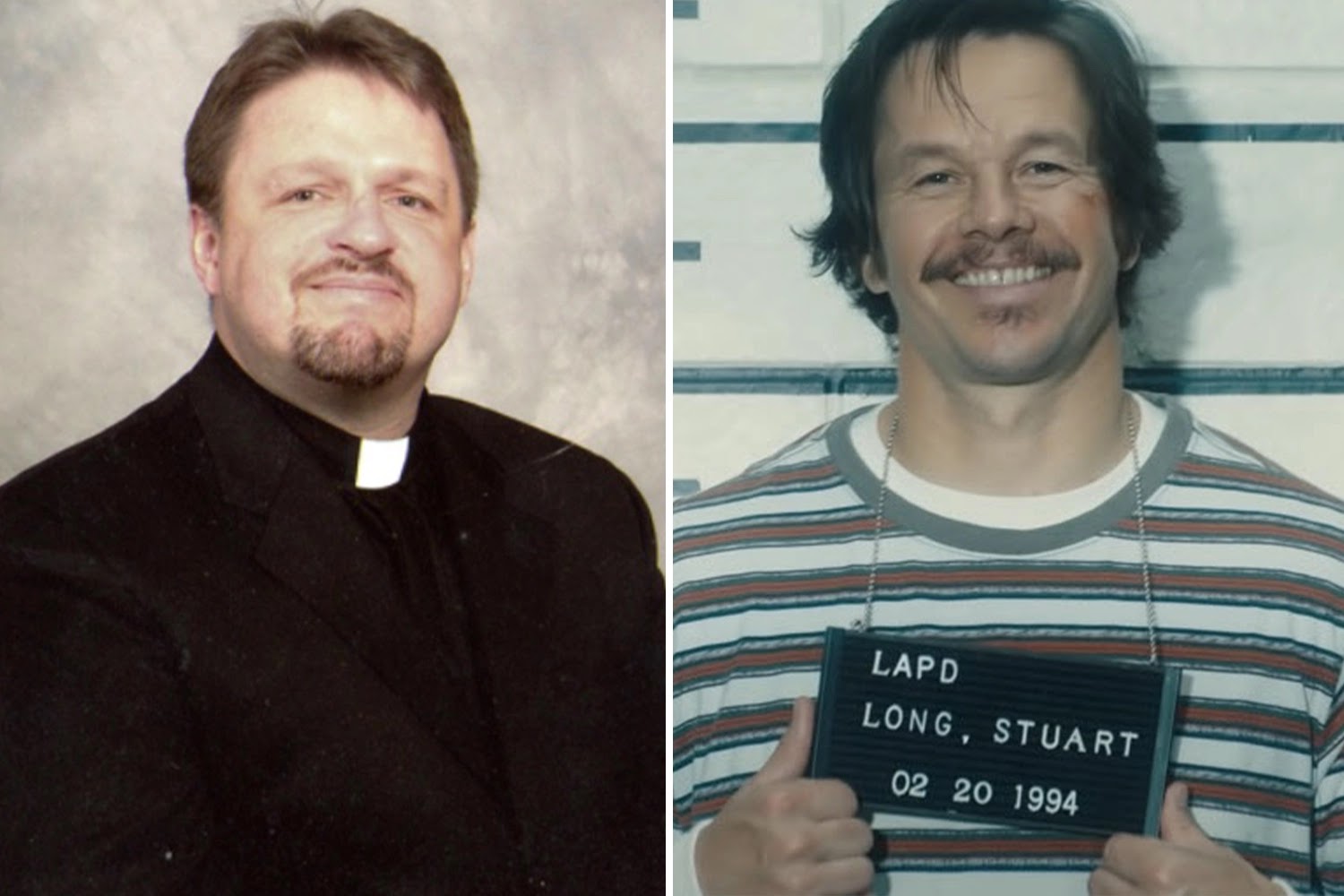
Father Stu and Suffering

I was set to pondering the idea of suffering again as I watched the movie Father Stu, starring Mark Wahlberg, Mel Gibson, and Malcolm McDowell. Its a great story of a going nowhere boxer from a dysfunctional family who meets a girl and follows her to her church (where has that story been told over and over?) where he finds a relationship with the Lord and decides to become a priest. I won't give it away but as part of his life he experiences much suffering and points several times to the fact that as Christ suffered, so must we. There's a lot of solid doctrinal truth in it. I highly recommend the movie but a warning that the language is coarse in line with the characters. It's a true story and one that many believers would find rings true with their experience, and the experience of others in church history.
That said, I was reading Spurgeon today and he used 1 Peter 5.10 as his the reference for his morning reflections today. "After that ye have suffered awhile, make you perfect, stablish, strengthen, settle you". The Bible tells us over and over, the path to peace and contentment doesn't lie through ease and entertainment, but suffering. Christ told us if the Master suffers, so must the students. If we would be established, strengthened, and settled, it requires discipline in suffering and faith in the One who allows it. Why do we think that's abnormal? Because we are still selfish, sinful human beings, wanting ease over discipline. It's rampant in our society. 

 History shows us there is a cycle to society: Oppression where we become unhappy with our circumstances; Liberty where we sacrifice whatever's necessary, even our lives, to throw off the chains; Enlightenment where we enjoy the liberties we have, expanding art, knowledge, and technology as we have more leisure time; Dissipation where we now are entitled, expect more leisure, are unhappy and bored with all of our toys and demand more and more entertainment. I fear we are in the last stage, where nothing is worth dying for if it intrudes on our pursuit of happiness, our own selfish wants and desires outweigh the needs of others, and we are undisciplined and lazy, abhoring any type of suffering for the sake of good: ours and others. We are unfulfilled in our search for happiness, looking for something to fill that hole. Unsettled as we look for that one thing that will satisfy. The thing that will finally scratch that itch. 

 But once again Father Stu, mirroring what Christ and the apostles say, reminds us there is no easy path to contentment. Submission to Christ as King and Lord and His will, whether it is a good day and we praise Him for our blessings, or suffering where we praise Him that He cares enough to bring us through suffering to contentment, is the only way. Even the course of history tells us that it requries struggle to get liberty and liberty allowed to languish undefended leads to dissipation and, ultimately, oppression again. "Those who chose to ignore history, are destined to repeat it". And those of us who don't ignore history are destined to raise the alarm but, sadly, watch as society devolves into dissipation. 

 God help us. He is our only hope. "For God so loved the world that He gave His only Son, that whosoever believes in Him shall not perish, but have everlasting life" John 3:16 

OFFICIAL TRAILER


BTW-Rotten Tomatoes professional critics say, in typical form: "A socially conservative, faith-based biographical drama, and an unconvincing, broadly played, sinner-redeemed story with shallow characterizations and the pick-up line: "I'd wait 40 years in the desert for you." and "Mark Wahlberg is convincing and committed as a foul-mouthed Father, but this is ultimately just religious propaganda — preaching exclusively to the converted." But those of us looking for a good movie with uplifting themes. The guy on the street likes it. I do.

Thursday, January 27, 2022

 What's In a Name?

The Bible says "A good name is more desirable than great riches" in Proverbs 22. Many times a name described a person and in some cultures the child would not be named until they exhibited particular traits.  Or they were named for the character the parents desired for them. Some were even renamed after particular traits emerged.  So what has brought me to this discussion?  Well, I've been thinking about a certain person and the connection back through time. 

The was a man with the name of Henry first name George.  I don't know a lot about his life story except he was a general at the outbreak of the American Civil War in 1861.  He earned the dismay and estrangement of his family when, as a Virginian, he stayed with the Union.  He was one of the Union generals at a battle along a creek in Georgia late in 1863 named Chickamauga, just south of Chattanooga, Tennessee.

By an error in giving a command (not by Henry) (that discussion will last through the ages) a unit was pulled out of the Union line and at the same time Confederate general James Longstreet attacked exactly at that point, routing the Union army.  The saving of the day came when Henry mustered the Union forces at a place called Snodgrass Hill.  The rebels attacked over and over, attempting to take the hill and finish off the rest of the retreating army, but they were unable to break the Union forces.  Around dark the Union army finally retreated back to Chattanooga, taking up residence there, and saving the army.  For his efforts George Henry THOMAS was named the Rock of Chickamauga.

MG George H Thomas (Am Battlefield Trust)

Part of the crowd that day, in fact one of the units pulled from the line, was the 59th Ohio Voluntary Infantry Regiment of which my great great grandfather, William H (Henry too but for Henry Harrison after the president-another story) Bartlow was a member.  Some of his unit may have stayed to fight on Snodgrass Hill, most didn't and fled a race back to Chattanooga.  I wonder though how much he thought of Henry when he was safely in Chattanooga.  By the way, the 59th, and many others of that rout, regained their face when a year later they charged a hill around Chattanooga named Missionary Ridge, and drove the Rebs back, eventually to Atlanta, and then the sea.

What makes me think William thought about Henry? Well, after the war was over, he moved, along with his wife and six children (along with many other soldiers and their families) west to Chase County Kansas looking for that free land and space.  In 1869, his first child, a son, was born there and he named him, yes you guessed it, George Hamilton Thomas Bartlow (I suspect he was guessing at the middle name but no doubt what he was thinking about with the George and Thomas part)

The family eventually moved to Winfield in Cowley County, in southern Kansas close to the opening Oklahoma Indian territory, eventually ending up in that same Oklahoma and George marrying a girl from Illinois, Louisippi Steele (the daughter of another CW soldier). They had three children, Francis, Lucy, and Earl-with a twist of the Rock. His name was Earl Irwin THOMAS Bartlow.  Sadly Lousippi died at a young age leaving George Hamilton with young kids. Thankfully they were helped in those years by William's wife and his mother Sarah (William having left for the gold fields).

George Hamilton Thomas Bartlow

Earl married my grandmother Rachel Icke and they began having children. A girl, a boy, a set of twins and then another Hamilton-my uncle Rex.  I never knew my great grandpa George since he died long before I was born, but Rex tells of his remembrances of his grandpa in "Zero To Eighty in Thirty Seconds, My Life Story", his unfinished, unpublished book.  I'm not sure if he knew of the Rock connection but he was proud of his tie to his grandpa Hamilton because of the character he saw there.  He was also proud of the Hamilton in his name.  He says, "He was my Hero and I am proud to have his name, (Hamilton). I hope that my Children, Grand Children and Great Grand Children can see just a little of Great Grand-Pa George in my life, because if they do they will see a little bit of what Jesus is like. I still love you Grand-pa."

Grandpa George with the grandkids and his Model A

So where does that bring me? A great story and very interesting but my name has no Hamilton or Henry, but it does have a Bartlow.  The Rock of Chickamauga intersected with the Bartlows in Georgia, 1863, due to a man of great character who didn't forsake his country and stood firm when things were hard. A man of character.  That effect has flowed down through my family history to today.  People taught to work hard, fear God, love their country to the point of sacrifice, and love their neighbor.  

And so the final chapter.  As you might know, I retired in July 2022, and looking for something to do, it was suggested by my cousin Brad (Rex's son) that I might volunteer at the Kansas National Guard Museum in Topeka on the maintenance crew https://www.kansasguardmuseum.com/.  So I did and the guys have welcomed me.  Men of character and honor who all served our great country.  They have my respect. But a strange thing has been occurring over and over.  I will be introduced as Rocky to new people around the museum and while they are all kind and welcoming it's not until someone says "his last name is Bartlow" that the smiles come out and the hand gripping begins.  "Are you related to Rex?"  And I can proudly say, "Why yes, I am".

Bartlow brothers. All (+ my dad Norman) served

The four Korea brothers at the Ks Nat Guard Museum

You see in that moment what the Bible says rings true.  That is worth more than riches can buy. Some have suggested to me in the past some shady ways to get ahead or make some money and I can safely say those things offered were never worth the price of my good name.  The name of Bartlow.  The Henry/Hamilton connection.  Maybe even the Rock of Chickamauga.  

Col Rex Hamilton Bartlow KSARNG

But of greater name than them all is the name of Christ, whose name I bear.  I hope to keep that name unsullied above all as I finish out my years.  I hope you're encouraged to take the high road and retain your good name.  Or if it's been damaged, start the road back to restoration.

Thanks for preserving a good name Uncle Rex.


Rex and Ardena Bartlow
Ks Adj Gen Lee Taffanelli presenting the flag to Ardena at Rex's funeral Jan 3, 2014


Friday, August 13, 2021

Little Woman With A Big Name

Louisa Caroline Douaberry Hoyle
My paternal great grandmother(my paternal grandmother Rachel's mom) was not a large woman, at least from the pictures of her I've seen, but she had a huge name-Louisa Caroline Douaberry Hoyle-Icke-Snider. That's a whopper. I get the Louisa and Caroline but I've never tracked down the source of Douaberry. Maybe one day, but not today. 

She had quite a life, born in Ashland, Cass County, Illinois on January 25, 1878 to Anderson Hoyle and Hannah Jane Combs, he from Illinois and she from Springfield Missouri. She was the fifth of seven; four older brothers and sisters (Catharine, Sam, Rachel, and Ettie) and two following (Thomas and Hattie). When she was just two she moved with her parents and siblings to Ness County, Kansas where they resided apparently until her marriage at the young age of 14 to John Icke,a 26 year old man,on June 14, 1892 in Bedford Iowa. He too was born and raised in Ashland, Illinois so maybe they had known each other for some time (Note: His mom was Mary Jane Coombs, her mom Hannah Jane Combs. Both born in southwestern Missouri and Combs and Coombs could be a misspelling. It's POSSIBLE they were sisters so John and Eliza would be cousins. I have a record of Hannah Jane's parents but not Mary Ann's. Hester's Bible also indicates Mary Jane and Hannah Jane were "indian"). They moved to Nodaway County, Missouri where her first children, Albert Elmer, Stella Mae, Mary Jane Hester, and Beatrice Hyacinthia, were born, the last two always known as Hester and Aunt Cinthy to all of us. 

In 1900 they packed up and headed to the new territory of Oklahoma arriving in O'Bryan township around Woodward and soon to be a pioneer of Woods County in 1901.
Sod House. John, Louisa, and 5 kids.
Tradition says Rachel and Joe are in the cans on the window ledge

She and John lived in a sod house at Fair Valley with the four kids they brought with them and some more added there-John Estle, Viola Belle, and James Lionel. It appears that her parents came west as well but I'm not sure when. But that they arrived is proven by their death places-Woods County-he in 1907 and she in 1929. Two more children were added-my own grandmother Rachel in 1909 and Uncle Joe in 1913. Sadly shortly after that, in 1914, John passed and Grandma was left with seven kids ranging from one to twenty-one. 


She spent five years raising the kids on her own but surely with the help of the older ones until she married Elijah (Lije) R Snider, a man 19 years her senior, on June 25, 1919. He was a one legged man shown by his photos and attestation of my uncles who said he was and they thought kind of a mean man. He was born in Indiana and came to Oklahoma in 1900 as well with a wife and seven kids. I'm not sure how it happened but he lost his leg, his eldest son in 1901 and his wife in 1917 and those things do something to a guy so may explain why he was grumpy. But evidently Grandma was okay with him although they had no kids of their own so we'll leave it at that.
Grandma, Lije & grandkids

Grandma and Lije lived around Avard for most of their time living apparently normal lives surrounded by children and grandchildren. Letters from 1932 and several in 1936 to her daughter Rachel tell of the normal routines of life and family. They include what is happening to her children and their kids, from their health ("I've had a cough and Albert's been sick"; "Lillian, Andrews, and Eula's babies have all been sick"), what everyone's doing ("Joe wants to go fishing"; "James is working but had to take two days off to haul "cole" and feed"; Louise had a boy "borned" on the 26th"). Of course there's the normal banter of the rural: cucumbers, grapes, plums and so forth, which is a large part of life for those used to growing their own food. And don't forget the weather: It's been hot and I'm about to melt to it's "cold but the house is "affel nice" after Margaret and I hung up a blanket making a 2 room house". All in a self-deprecating format for those with limited education, referring to her handwriting as "pig tracks" and apologizing for the writing to such a point that "if you can't read it, bring it with you next time you come and I'll read it for you". Letters were the way to communicate before telephone communication was affordable and show the back and forth format, answering apparently previously asked questions and commenting further on comments offered before. Then asking more questions that were expected to be answered by the recipient on the next go-round. Letters that indicate her love and faith signed by "from mother to loved ones. God bless you all is my prayer". 
Grandma and grandkids

Grandma came to faith in Christ as a Baptist apparently around 1916. Her faith is evident in many of her writings as she blesses her children, asks for prayer for herself and others, and wishes "grandpa would trust God for relief" (makes me wonder how much Lije joined in her faith). At her funeral the pastor's prayer noted her belief and her eternal hope. The pastor's sermon on Revelation 14.13 (Blessed are the dead who die in the Lord) noted that she praised God in her last hours and was peaceful. She heard the bugle call, her labor ended, and her spirit is at rest in paradise. A woman of great faith who exemplified her trust in all of life as we shall see next. 

 Apparently she felt sick and began treatments which made her sick according to a letter to Rachel in February 1936. One wonders if it was radiation or chemotherapy.*

Muscatine, Iowa

 By May she had to go to Baker Hospital in Muscatine, Iowa for further treatment (Evidently run by Norman G Baker who followed a similar track of the famous "Goat Gland Doctor-John Brinkley of Kansas. Both ran "border blaster" radio stations promoting their so-called medical cures for which they were sued many times. Baker claimed to cure cancer using expensive injections of "a mix of common substances including corn silk, watermelon seeds, clover, water and carbolic acid"**). The train trip took 15 hours from western Oklahoma to Muscatine, a town (at that time of 17,000) on a bend in the Mississippi west of the Quad Cities. She arrived at 3am after a long trip and a 4 hour layover in Kansas City where she would have visited bother Sam if she had know where he lived. She noted the trip was pretty with rolling grasslands, gardens and cattle. At Muscatine she said the Mississippi ran right by the front door and was the sight of boats going up and down the river, some hauling gravel and on one day a steam powered pleasure boat with lights and lots of people. She took the time there in stride, taking advantage of trips to town and walks but preferring to stay on dry ground. In most letters she said she felt better and for them "not to worry" but tell the boys not to tear the house down. Her side hurt at times and once she had ulcers in her nose treated by medicine on cotton which she did describe as "nasty". She thought the original problem was appendicitis but said it ended up not that but "colitis of the colon" and that didn't "amount to much". Later she said the colitis cleared up but in June she would have to stay another week due to infection in the large intestine and would not make it home for the Fourth of July. One can only guess what kind of cancer she had but I suspect colon or ovarian and probably was not getting proper treatment from Dr. Baker as indicated by his history. 
 But she appeared to get along well at the hospital (actually the Baker Institute) where she has her Bible and a "colored kid" keeps the papers for her; where she was able on Sundays to go to Sunday School, worship in the basement, and preaching at 7 at night-"more church than at home!". She describes the place as a family environment with lots of good Christians there and they take their meals in the basement cafeteria although there is no white bread or sugar, nor red meat. Brown bread, brown sugar, chicken and fish. And only barley coffee-not the real stuff. 
A couple things of note that appear during her stay-a deepening of faith and the plight of others as well as an apparent description of the inability of the "doctor" to cure anyone. She asks repeatedly for prayer for herself and her needs as well as others around her. She asks for prayers for "suffering humanity" as she realized when she got there that she had "no idea there was so much". Some of the stories she tells are of two women who went home one day, one to Texas and the other to Nebraska because the doctors can't help and of a 16 year old girl who lost her left breast. The people she experienced drove her to greater prayer on their behalf and the request that others pray for them and her as well. She says in her May 13 letter that she "feels the presence of the Lord" and asking more each day for His guidance.
Nov 15, 1936. Last photo
So Grandma went home sometime in July 1936 but evidently she was like the Texas and Nebraska women for whom the doctors could do nothing. She and Lije moved sometime in late November to Capron, Oklahoma (6.5 miles NE of Alva) where she passed on December 14, shortly before her 59th birthday. Her funeral was held at the Stiles-Howerton Funeral Home in Alva on Wednesday December 16, a "beautiful winter day". There were greater than 135 guests and the flower list of mums, carnations, orchids, calandulas, and marigolds goes on for four pages so the service must have been filled with fragrance. The organist played In Monastery Garden, Bells of St Mary, Largo, and Abide With Me while a quartet sang Eastern Gate, Sheltered in the Arms of Jesus, When the Roll is Called up Yonder, and Rock of Ages. The pastor, Reverend Fortenberry of Waynoka spoke aptly on "I Am the Resurrection and the Life.

 Little Woman; Big Name; Bigger Faith. 

 *Cancer treatment as we understand it was unknown until the DNA discovery by Watson and Crick in 1953. 
Primary Source Documents:

Wednesday, April 7, 2021

Fixing the Plumbing

 I've been re-reading my posts anticipating some more time on my hands and realizing there are many stories to recount. I'm planning to retire in July this year (2021) after ALMOST 45 years at Southwestern Bell/SBC/AT&T and plan to add some more stories.  

Well, while walking down memory lane and reading my original posts from back when I started in 2010 (some of those are pretty good!) I realized I had not finished the promised stories.  After I Married a Dentist, Bees in the Bathroom, and the Waterbed story, I promised some others.  So this is the continuation of the saga of the Williams Ranch outside of Broken Arrow, Oklahoma.

If you'll recall, from past stories (say, some of those are really good!), my mom married a "dentist", Don Williams, who turned out to be a bootleg false teeth maker, operating out of an old farmhouse.  The reason for the location was that at the time only Oklahoma and Arizona allowed that kind of operation and even then, Broken Arrow didn't allow it in the city limits. Thus, just outside of town, on a dead end road by the airport outer marker, was the Williams Ranch.

It was a truly bachelor pad until my mom married Don and moved in.  She added some feminine touches but it was still what it was: a fire hazard with bees in the wall of the upper floor, overgrown out back making a good place to fling the trash bags, a cistern for water (hauled from town), and bad wiring and plumbing (the source of this story).  But the roof didn't leak-I don't think anyway.

Don in his denture making shop
So to the plumbing.  I'm sure the original plumbing was iron pipes and probably even done well. It lasted a long time.  Some had been upgraded. Like out in Don's shop in the garage.  It had a sink and a drain-that dumped into the back yard.  I'm sure it also had a septic tank and field and must have worked because when you flushed it went somewhere but no idea how long it had been since it was checked. 

So our story starts in the kitchen.  When we were visiting one day Don asked if I would help him with the sink faucet since it was so wobbly.  He had purchased a new set and wanted to replace it.  Now the kitchen had the original equipment and when I say original I mean ORIGINAL. The (probably) 1940's sink, porcelain covered steel, stove and maybe the first ever manufactured dishwasher-long since broke but a good storage spot.  Nothing ever upgraded.  So there was the problem.  The holes where the faucet stems went through the sink top has wollered out so much that you could pull them up out of the sink and made it really hard to use.

The Kitchen

So Don had a new set he was going to install but they would have had the same issue.  The holes were just too big.  I suggested we needed something to restore the smaller diameter but couldn't think of an answer other than to replace the sink.  Well that would cost money and wasn't going to happen (although Don always had ready cash and I wondered if he had stashes all over the yard).  So Don says, "Come with me" and off we went on a yard safari.

Now Don was a true Okie and I mean that in the most respectful way since all of my family, dad, mom, aunts, uncles, are Okies and very frugal, very resourceful. Having been raised where two bits was the difference between existing and starvation, bent nails were repurposed, lumber never went to waste, and you used what you had. In this case as we kicked around the yard we came to an old turkey roaster.  With the aid of a drill for the holes and some tin snips we had the makings of a new sink-top faucet mount.  We took it inside and with the help of a claw hammer to beat it into place got the new faucet mounted and working.  Voila!

The next project was the issue of the old pipes under the house that quit working.  Probably as mentioned old iron pipes that finally gave up the ghost.  Well I wasn't going under that house in the crawl space for sure and Don didn't think that was a good idea either-that part of Oklahoma being copperhead and rattlesnake territory and the fact no one had been under the house since Noah's flood.  But he had a simpler, and easier plan.  Plastic pipe.  Now I'm not opposed to plastic pipe and have long resorted to that easy method as opposed to sweating copper (These days I use PEX and will NEVER go back to plastic or copper!) so I said, "Great! How are we going to get from the kitchen (where it was working), through the bedroom, to the bathroom, where it was not working, without going outside or through the crawl space? Easy! Remember the aforementioned claw hammer? Seems the business end of the hammer makes a hole in the wall just the size of a 1/2" pipe (a little rough around the edges).

So...bash a hole under the sink into the bedroom and another one from the bedroom into the bathroom, grab a few elbows and a saw, and we proceeded to run around the bedroom baseboard and complete the job-sans glue.  I mentioned to Don that we were supposed to clean the joints and glue them.  He said friction would work. I suspected not but when he turned on the water it held. There may have been times he had to get up in the night and slap some glue on a joint but I was never told about it. 

I write this with a great fondness and respect for Don. He was a veteran and took good care of my mom, brother, niece and nephew, for many years.  He was a kind and resourceful man and even though he did things and lived differently than I would, he was a good man.

Don Wesley Williams (1917-2000)-a good man

And as far as I know, the plumbing was still working when they bulldozed the place after they moved up in the world-to a new trailer.

Saturday, July 18, 2020

The Legend of the Rock House


Many tales have been told about this house in our family lore and I thought I would try to add some facts to the stories as well as some interesting information for those who know the tales and those for whom this is all new.

So how did we end up there?  Well, in 1939 when my dad was but a tike, Grandpa and Grandma lost the farm when they got a mortgage to pay for a tractor and couldn't make the payments.  The Bay family (Aunt Marilyn's parents) allowed them to set up in a corner of their property with good water, a windmill, and shade.  So they bought a tent and lived there-all eight of them-until the crop was in and then they loaded up in a '29 Model A and a two wheel trailer containing all of their worldly goods and left Oklahoma for Seligman, Missouri.

You have to intend to go there to get there.  One doesn't happen to go by. It's a simple rock house on the Missouri-Arkansas line where the only path from Seligman is an old mud road along a railroad track and a low water crossing.  So they had to have a reason to pick this house.  Well, that's where it gets interesting. Not everything in this story can be verified but a lot can. The story goes that the house was built in the Swiss style. Uncle Bart describes it this way, 

"The old rock house was the last house on the road before the Arkansas line. It had been built by a Swiss man who carved out all the stones from the limestone cliffs by hand and built the house in the Swiss style so one wouldn’t have to go out in the deep snows of Switzerland to feed and care for the cows. One could go from the house directly to the milking parlor or go upstairs, cross over the milking parlor to the hay mow, and feed the cattle in the barn below. "

I can document what happened to it after 1900. Grandpa and Grandma passed the papers down to Aunt Leta and after she passed Uncle Loyd gave them to Uncle Vic and he gave them to me. Some were so brittle and faded as to be almost unreadable. BUT there's enough to make a faint trail. So here goes.

I don't know when the house was built but on November the 12th, 1900, a man named G.A.Ramsey sold it to Thomas Banks and he to Mary Frost on March 21, 1901. She in turn sold it to the Sinclairs on January 10, 1903 and they in turn sold it to James Dobbie on January 18, 1904 so this is where it gets interesting. Evidently Dobbie came from Scotland with his wife and they brought their niece Jean, then about 6 or 7. We know this because Jean later sued James Dobbie's widow (his second wife Mary) in 1919. She claimed James was given $15,000 to $20,000 (quite a sum in those days) to support and educate her. She said, in the lawsuit document, that James' first wife died when she was about 13 and Dobbie used the money to buy the house. So she felt the house belonged to her. Apparently she couldn't prove the claim as the house stayed in the Dobbie family until 1922.

James remarried a woman named Mary but she died on April 9, 1918 and the property became hers by virtue of his will dated August 24, 1917 which was probated on April 17, 1918. Mary Dobbie then sold the property to Grandpa George H.T. Bartlow and his sister Laura Tansey for $3500 on May 17, 1922.

The story picks up, document wise, in 1939. The house was apparently handed down to George and Laura's heirs, namely Lucy and Earl (Francis died in 1918 of the Spanish Flu) and Byron and Mildred. We know that because of a letter from Byron to Earl evidently in response to a letter from Earl inquiring into buying the house. Byron says he and Mildred would accept $400 for their half (evidence of the run down condition of the property as noted below). So from there we can only surmise it was all arranged and the Bartlows migrated east. When they took possession they had to do repairs as the house had been rented and the renters who were supposed to use the rent for repairs never did. The roof leaked and one of Grandpa's first tasks was to get some tin and patch the roof.


Living was hard but life continued on. Uncle Vic was born there in 1942, the only one of the kids born during this period (1939-1944). Some indication of life there is described by Uncle Bart, "There was a 40 acre field of alfalfa hay that had never been mowed and was so rich that Earl could stick his arms out level with the top of the hay and a man could throw his hat out over it and it would never hit the ground. Among other crops, they grew peanuts, which they stored in the dining room of the old house on the Arkansas property. After working all day they would shell peanuts and feed the vines to the cattle. One day the peanuts started disappearing and they thought someone was stealing them but later went to the house and found the ceiling collapsed in the dining room. It seems the pack rats had been stealing off with them and storing them in the ceiling between the joists until the weight dropped the ceiling. They packed up all the peanuts, cleaned up the mess, and moved the peanuts to an alternate site. They made their own peanut butter from the crop."

Grandpa never could get enough work, or get paid enough for it anyway. They scraped by near starvation and sometimes the train crew would throw out food. One year they were so close to starvation and they were praying for relief and the Lord provided by way of a trailer load of food showing up just in time from Uncle Willy, Aunt Lucy and their church back in Kansas. Eventually they threw in the towel and moved to Howard, Kansas, close to Uncle Willy and Aunt Lucy. We can only guess that the property was lost to taxes and the family lost hold of the property, theirs from 1922-1945. They farmed in Kansas for a few years, lost everything again, and in 1949 moved to Oklahoma where they were more successful and lived out the rest of their lives.

We are descended from such hardy stock. We are not descended from fearful men.

Note: The Rock House was still standing in 2006 when Kathi and I visited. It can be found south of Seligman, MO on Highway then five miles east of Highway 37 on FR2285 or 2 miles north of HIghway 187 (west of Beaver, AR) on Carroll County (AR) road 232. The Arkansas approach is best as the Missouri approach can be nearly impassable at times.
Approach from US 187 on Carroll Co 232 north.
The Rock House and barn in 2006


Bibliography. Shared with everyone. Click on links below.

Bibliography. Shared with everyone. Click link below.
A Conversation with Warren H “Bart” Bartlow, Nov 9, 2006.  Click Here
A Sunopsis or Testimony, Earl I.T. Bartlow, Undated. Click Here
Rock House Location, Rocky L Bartlow, Nov 13, 2006. Click Here
DobbievsDobbie, page 1 Click Here
DobbievsDobbie, page 2 Click Here
Letter BTansey-EBartlow p1 Oct 15, 1939, Click Here
Letter BTansey-EBartlow p2 Oct 15, 1939, Click Here
Probate, James Dobbie, April 17, 1918, Click Here
Will, James Dobbie, August 24, 1917, Click Here
WD Dobbie to GBartlow-LTansey, p1, Click Here
WD Dobbie to GBartlow-LTansey, p2, Click Here
WD Dobbie to GBartlow-LTansey, p3, Click Here